
Winterizing Your Garage Door: A Phoenix Homeowner's Fall Checklist
Getting your garage door ready for winter in Phoenix isn't about bracing for freezing temperatures — it's about undoing the damage from six months of extreme heat before cooler weather and holiday traffic put new stress on the system. Our winters are mild compared to most of the country, but the swing from scorching afternoons to cool desert nights, plus the dust monsoon season left behind, adds up to real wear and tear that's easy to ignore until something stops working.
What This Season Actually Does to a Garage Door Here
By October, most garage door hardware in the Phoenix area has spent a summer baking in a garage that routinely hits well over 100°F. Grease has thinned out or burned off, plastic parts have gone brittle from UV exposure, and rubber seals have dried and started to crack. Now the nights are cooling off fast, sometimes dropping 30-plus degrees from the daytime high. That daily expansion and contraction stresses metal springs, tracks, and fasteners that are already fatigued from summer.
Add in the fine dust that monsoon storms kicked up and tracked into every moving part of the door, and you've got a system that's due for a reset before winter settles in and before garages fill up with holiday decorations, guests' cars, and extra storage.
The Fall Maintenance Checklist
1. Re-Lubricate Everything That Moves
Summer heat breaks down lubricant faster than most homeowners expect. Wipe down the tracks, then apply a silicone-based or lithium-based garage door lubricant to the rollers, hinges, springs, and the opener's chain or screw drive. Skip WD-40 for this — it's a degreaser, not a long-term lubricant, and it'll attract more dust than it repels.
2. Inspect Weatherstripping and Seals
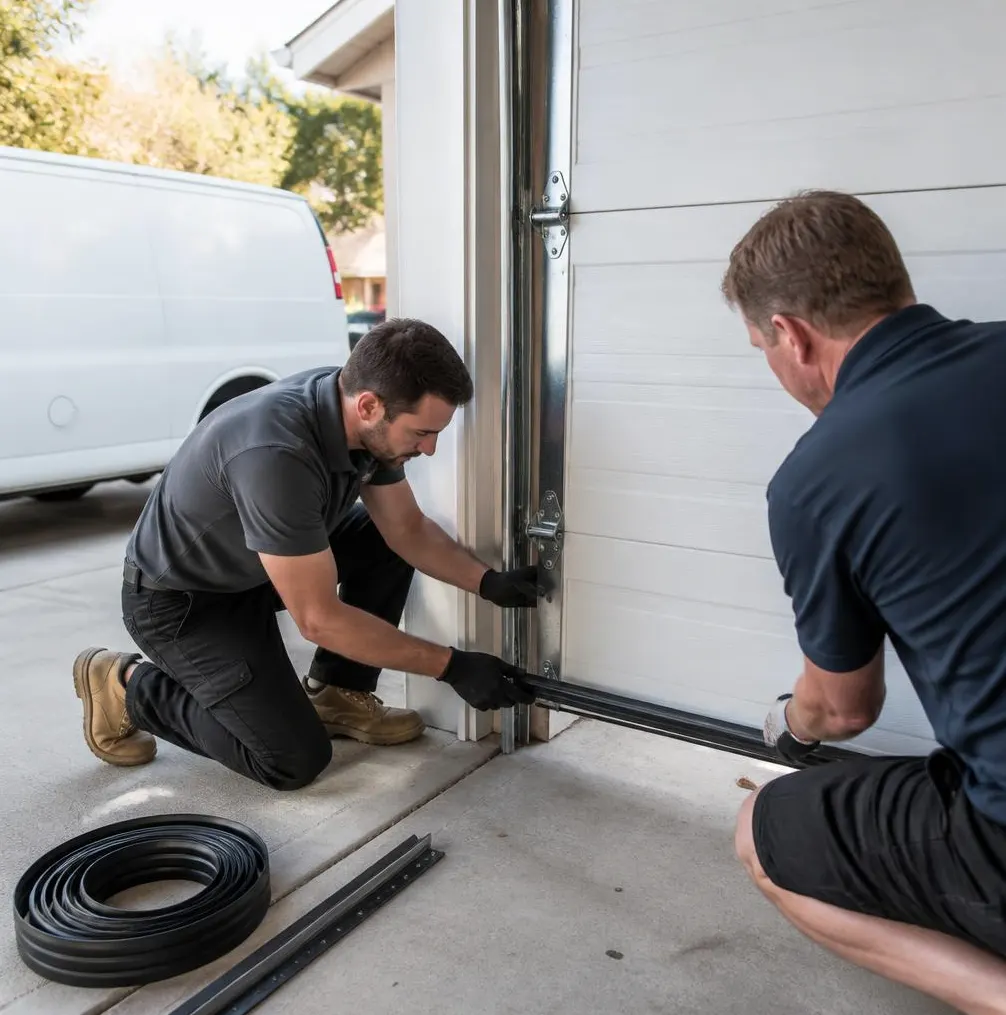
Check the rubber seal along the bottom of the door and the weatherstripping around the frame. If it's cracked, flattened, or pulling away, now is the time to replace it. New seals keep cool desert nights from turning your garage into a cold box, and they keep dust, scorpions, and other critters out — all common complaints this time of year once temperatures drop and pests look for warmer shelter.
3. Clean Out Monsoon Dust and Debris
Run a vacuum or stiff brush along the tracks to clear out the grit that built up over the summer storm season. Packed dust in the tracks makes rollers bind, forces the opener motor to work harder, and accelerates wear on the rollers themselves. While you're in there, check that the tracks are still straight and properly aligned — gusty late-season winds can knock brackets loose even without storm damage.
4. Check the Springs for Heat Fatigue
Torsion and extension springs lose tension and strength faster when they've been cycling through extreme heat for months. Signs of a spring on its way out include a door that feels heavier than usual when lifted manually, visible gaps in the coils, or a door that jerks or hesitates partway through its travel. Springs are under serious tension and are not a do-it-yourself repair — this is one job to leave to a trained technician.
5. Test the Auto-Reverse and Sensors
Monsoon dust and heat haze can knock photo-eye sensors out of alignment without it being obvious. Place a cardboard box in the door's path and close it — the door should reverse immediately on contact. If it doesn't, or if the sensors' indicator lights are flickering or dark, clean the lenses first, then check alignment. This matters more in winter when shorter daylight hours mean the door is closing in dimmer light, and sensor issues tend to show up more noticeably.
6. Look at the Opener's Battery Backup
If your opener has a battery backup, cooler weather is actually the best time to test it, since batteries that struggled through summer heat often fail completely once temperatures swing. Press the test button or disconnect power briefly to confirm the backup kicks in.
7. Inspect Panels for UV Damage
Steel and wood-composite doors facing west or south often show fading, chalking, or warping after a full summer of direct sun. Fall is a good time to touch up paint, reseal wood doors, or flag any panel that's started to warp, since cooler temperatures make paint and sealant cure better than they would in summer heat.
8. Run a Balance Test
Disconnect the opener, lift the door manually halfway, and let go. A properly balanced door stays in place. If it drifts up or crashes down, the springs need adjustment. An unbalanced door forces the opener motor to work overtime, which shortens its lifespan.
When to Call Precision Garage Door of Phoenix
If your door is sluggish, noisy, unbalanced, or the springs look worn, don't wait for a Phoenix cold snap to make it worse. Our technicians handle Spring Replacement safely with the right tools and tension gauges, and our Preventive Maintenance service covers a full inspection, lubrication, and adjustment of tracks, rollers, cables, and hardware in one visit — exactly the kind of once-a-year tune-up that catches summer heat damage before it turns into a weekend without a working garage door.
Ready to get your garage door squared away for the season? Call Precision Garage Door of Phoenix today and we'll have a technician out to inspect, adjust, and fix it right the first time — serving Phoenix, Glendale, Goodyear, Avondale, Tolleson, Litchfield Park, Buckeye, and Peoria.